
From La Mancha to Pike Place: A Cheesemonger’s Education
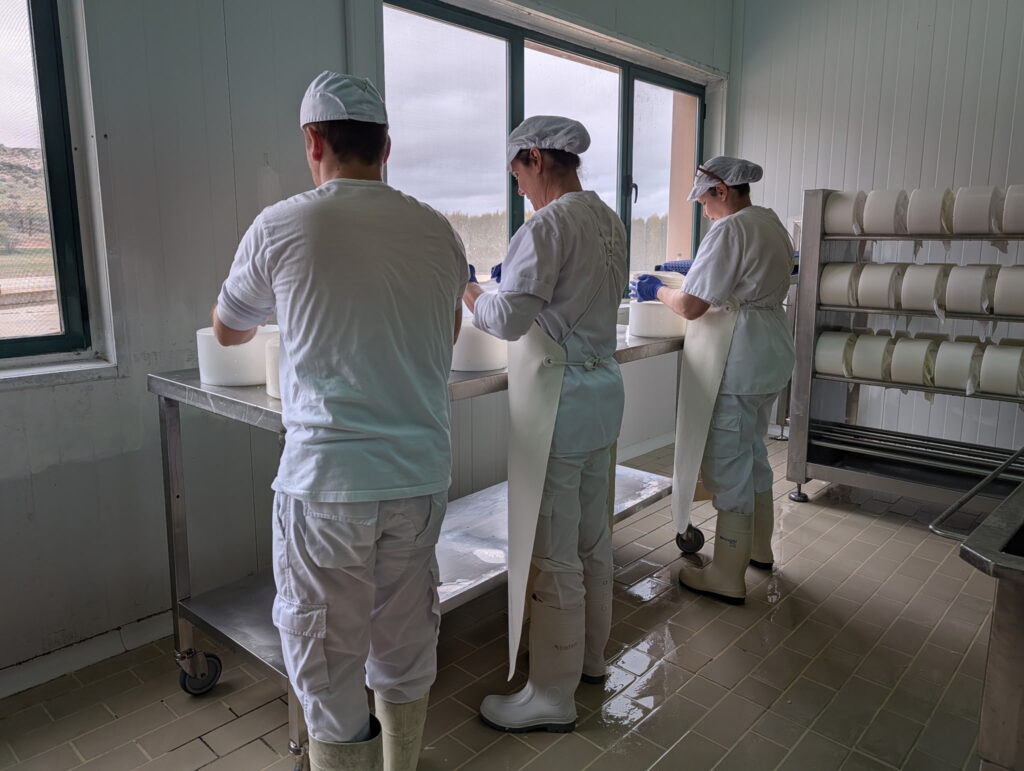
On a cool morning in early February, Tyler Wilbourne changed into sterile whites in a small creamery outside the town of Herencia, in the heart of La Mancha. Hundreds of wheels of Manchego sat aging in rooms nearby. Four cheesemakers were already at work. Within minutes, he would be too, flipping wheels by hand, packing curds into molds, and learning at the most intimate level where one of DeLaurenti’s most distinctive cheeses comes from.
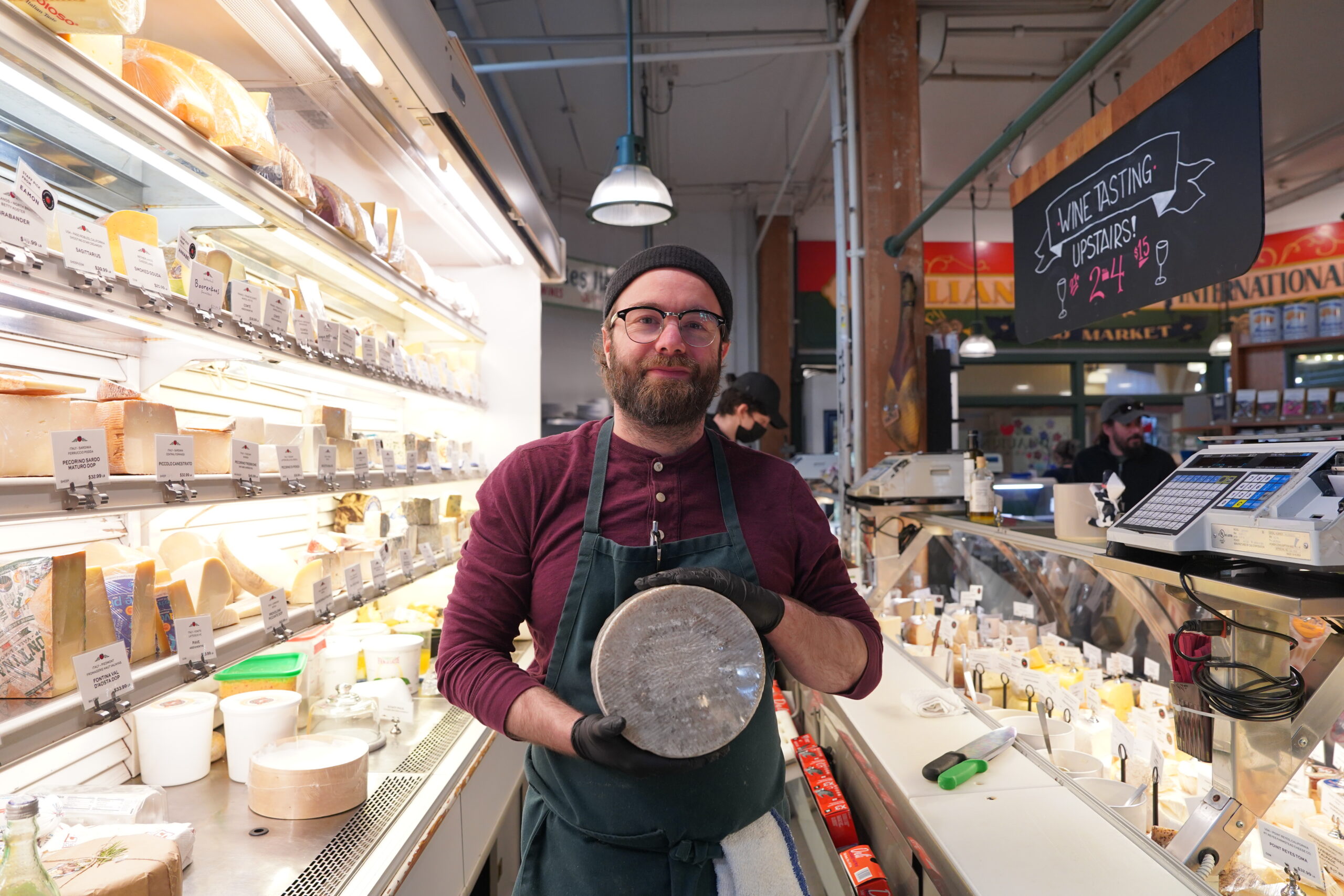
Tyler is a cheesemonger at DeLaurenti. He’d spent most of the previous two decades as a cook before pivoting to the cheese counter three and a half years ago. Each year since arriving, he applied for an internship sponsored by Essex Street Cheese Company, the U.S. importer of Manchego 1605, which offers Spanish-speaking food professionals the chance to work alongside the producers at Finca Sierra la Solana. This year, he finally got the chance.
The internship lasted two weeks. Part of that time was spent in Madrid, including a stint behind the counter at a high-end cheese shop. But most of it was spent in La Mancha, at the farm and creamery. The shop in Madrid was an education in itself: learning the vocabulary of Spanish cheesemaking in a Castilian accent far removed from the Mexican Spanish Tyler had learned 15 years earlier. “It was a lovely challenge,” he said. But the deeper revelation came at the farm.
What surprised him most was the scale, or rather, the lack of it. Four people make the cheese. Four shepherds tend the flock. Together, this team of eight produces a Manchego that is sold around the world, 60 to 100 wheels a day, almost entirely by hand. “I had no idea that it was such a small, intimate team that made the cheese,” Tyler said.
A typical day began at eight, after the sheep had already been milked at six. While the raw milk warmed to temperature, the team flipped and rubbed down aging wheels, some just days old, others approaching 17 months, spreading the natural mold that forms the rind. When the milk was ready, cultures and rennet went into a vat holding up to 1,000 liters. Forty-five minutes later, the curds were drained and packed by hand into cloth-lined molds. “That was all hands on deck,” Tyler said. “Everybody got involved.” From there, the wheels went into a mechanical press, then into a salt bath overnight, and finally into aging rooms where they’d be flipped weekly for months.
The few machines on site, a press, a cutter for portioning wedges, a bristle brush for cleaning rinds before shipping, save time without altering the essential character of the cheese. Everything that matters is still done by hand, the same way it has been in this region for centuries.
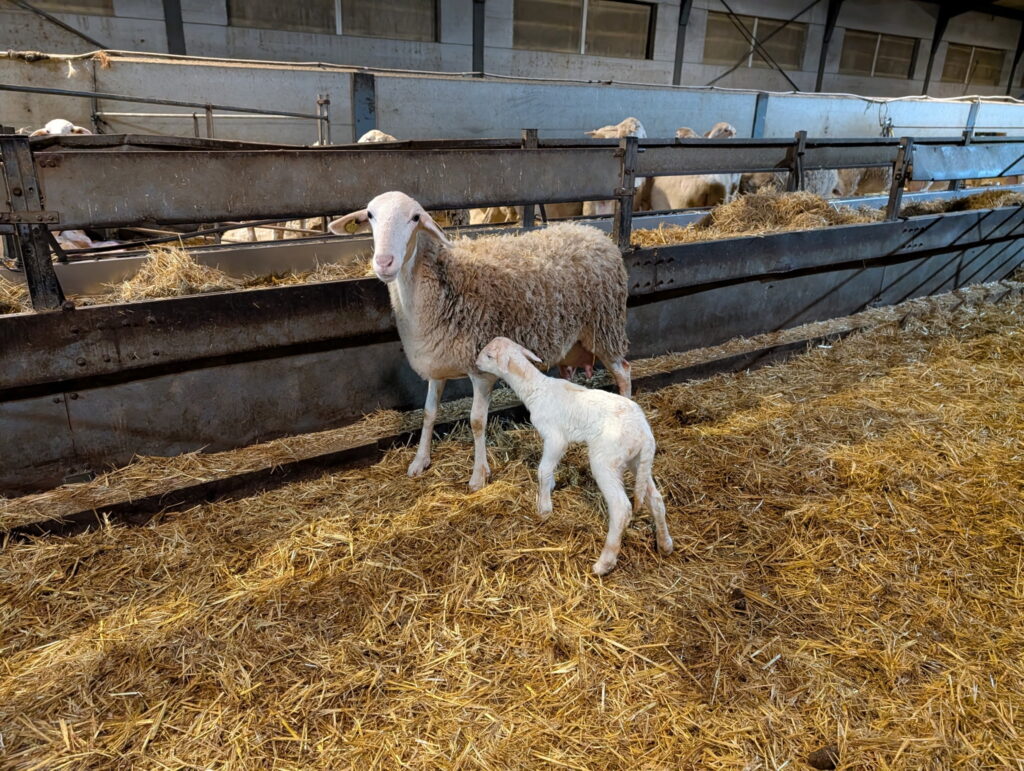
Tyler also spent time with the shepherds, rising before dawn to help milk roughly 600 Manchega sheep, then distributing alfalfa through the pens. “It was kind of wild,” he said, “to see the whole experience start with alfalfa growing out of the ground, becoming cheese that I was wrapping up and shipping off to places all around the world, all happening within the same facility.”
After the internship ended, Tyler took a couple of extra weeks to travel north into Basque Country, drawn by its food culture and its cheeses. He came back with a deeper feel for the Spanish hams that DeLaurenti carries, and for the way food and place are bound together across the regions of Spain.
Back at DeLaurenti, that knowledge shapes the way he sells. When he recently unwrapped a shipment of Manchego 1605, he recognized the packaging — he’d wrapped hundreds of those same wheels himself just weeks earlier. The cheese is named for 1605, the year Don Quixote was published. When a customer asks about it, Tyler talks about the natural rind, the edible quality that sets it apart from wax-sealed Manchegos, and the sweetness and balance that Essex Street selects for. He talks about the small team and the handwork. “It’s all happening in-house, in one location,” he said. “Besides the few little mechanical advantages, it’s being done the same way people have been making Manchego in that region of Spain for hundreds of years.”
That is the kind of knowledge you can hear at the counter. Tyler is not simply repeating a producer’s backstory. He has seen the sheep milked before dawn, watched the curds packed into molds, flipped the wheels in the aging room, and wrapped them for shipment himself. What he offers customers is something more specific and more useful: an understanding of how this cheese is made, who makes it, and why Manchego 1605 tastes the way it does.
You can buy Manchego 1605 and many more of the world’s finest cheeses at DeLaurenti.